


Multiple technical perspectives.
One reviewable workflow.
Metadatica is a desktop application for examining, cross-checking, normalizing and documenting technical metadata and bounded structural information from audio and selected video files.
More than a metadata reader
Metadatica brings several stages of technical media examination into one structured environment, reducing the need to move manually between separate tools, raw outputs and report documents.
Multi-engine cross-checking
Metadatica can integrate with ExifTool, MediaInfo and ffprobe as independent external analysis sources, alongside its native structural parsers. Their observations are preserved, normalized and compared with source attribution for forensic review.
Differences remain visible
Provider disagreements are preserved and attributable. Metadatica does not manufacture a majority winner when sources disagree.
Normalized, attributable data
Equivalent technical observations can be organized into a normalized semantic view while retaining their provider source.
Non-destructive workflow
Normal analysis reads the selected source media without modifying it and keeps file identity, technical observations and declared context distinct.
Hashes and technical identity
Calculate whole-file SHA-256, with optional SHA-512 and legacy MD5 where selected, alongside technical file and stream observations.
Professional documentation
Move from examination to structured reports and technical exports without manually rebuilding the same information in separate documents.
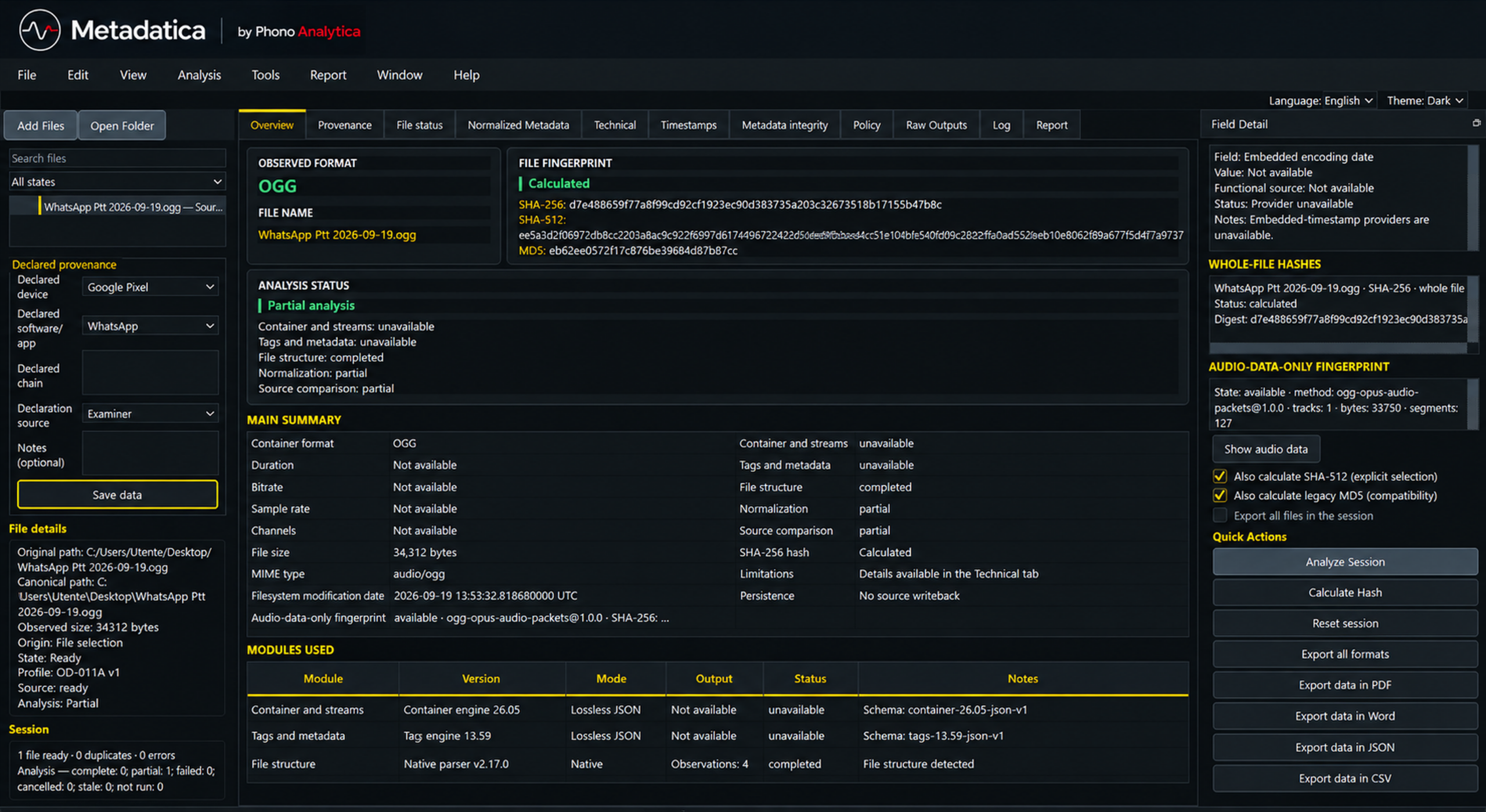
Complex metadata organized for review
The interface separates session context, examination workspaces, field-level detail and quick actions. Dedicated views include Overview, Provenance, File Status, Normalized Metadata, Technical, Timestamps, Metadata Integrity, Policy, Raw Outputs, Log and Report.
Two clear interface modes. One examination workflow.
Metadatica provides both Dark and Light interface themes so the examiner can choose the visual environment that best suits the working conditions and personal preference. Changing the theme affects presentation only; the underlying analysis results remain unchanged.
Dark interface
Designed for focused technical review and prolonged examination sessions.
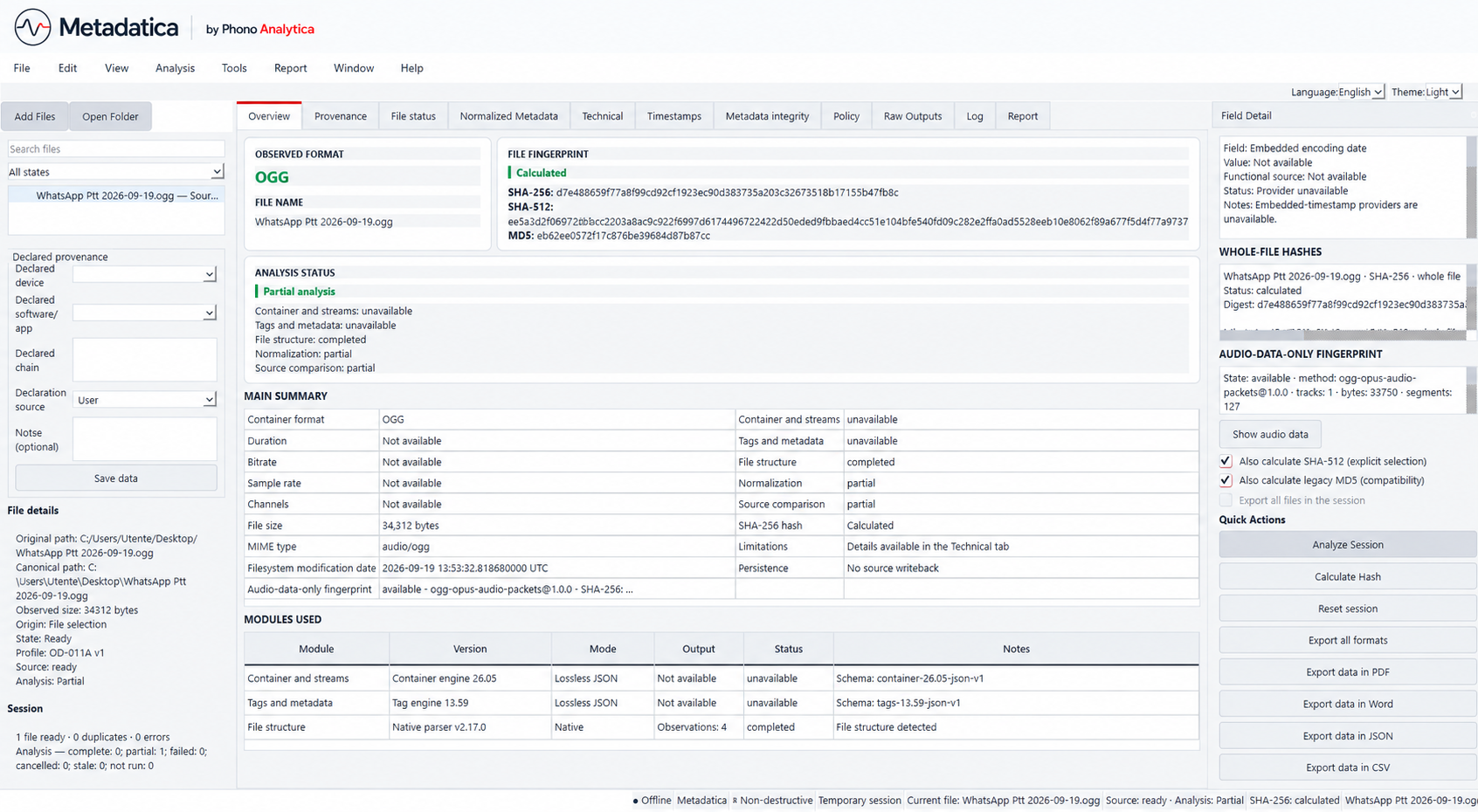
Light interface
A bright alternative for document-oriented review and well-lit working environments.
Provenance, technical structure and file status in context
Dedicated workspaces keep declared context, detected observations, structural detail and analysis status separated and reviewable.
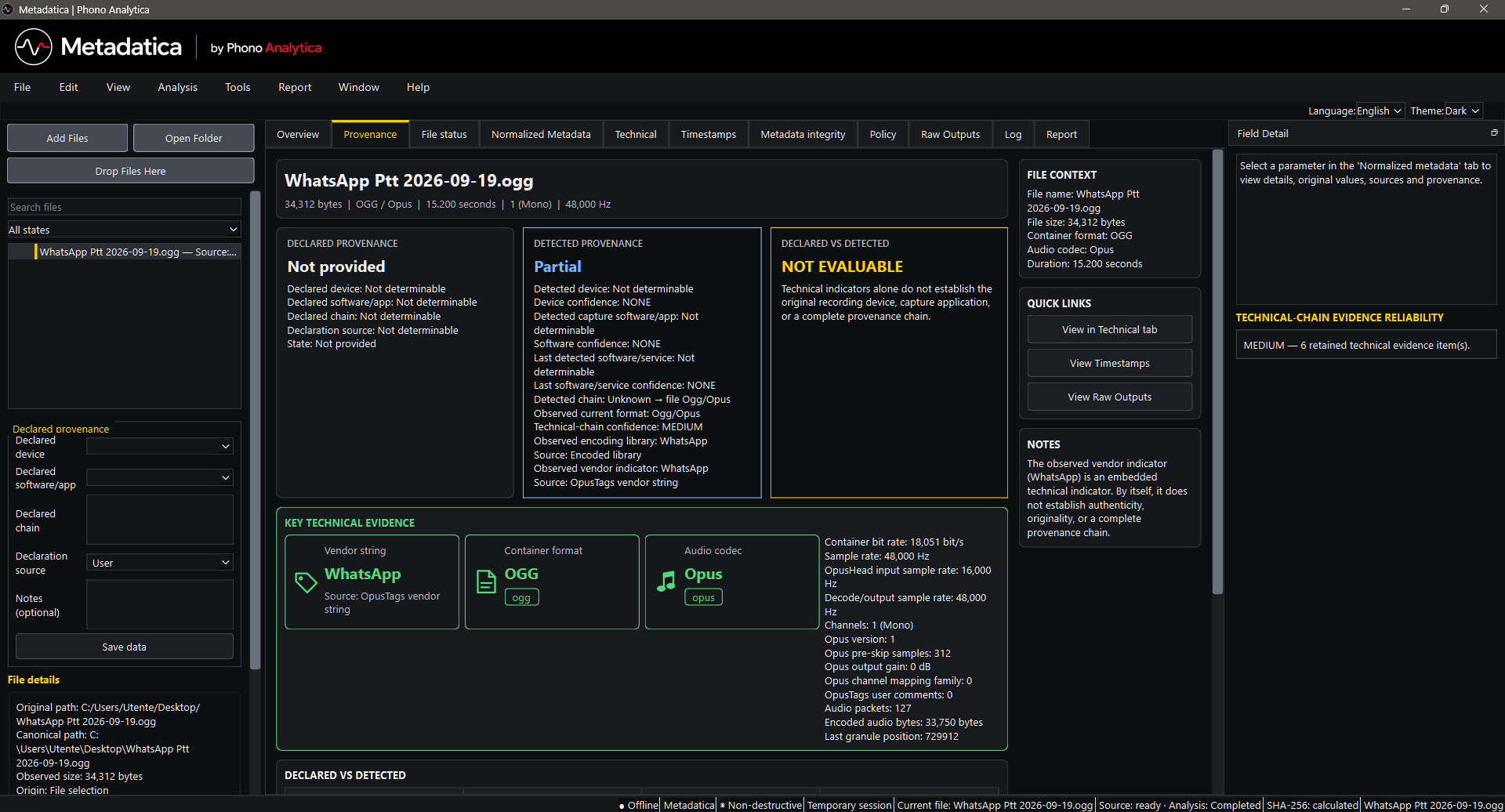
Provenance
Declared information and detected technical observations remain distinct for review.
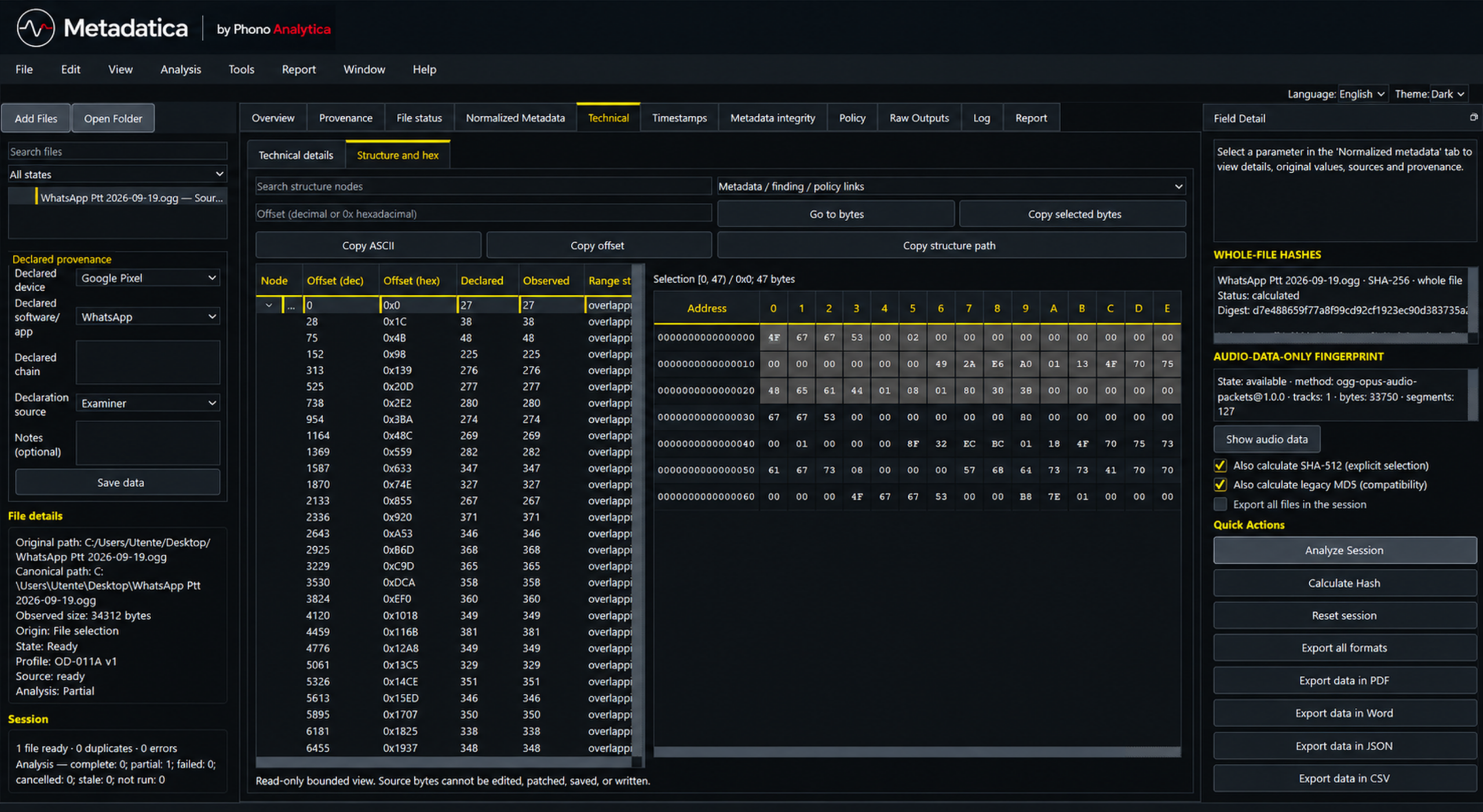
Technical / Structure & Hex
Read-only structural inspection exposes offsets, bytes and bounded file-structure information.
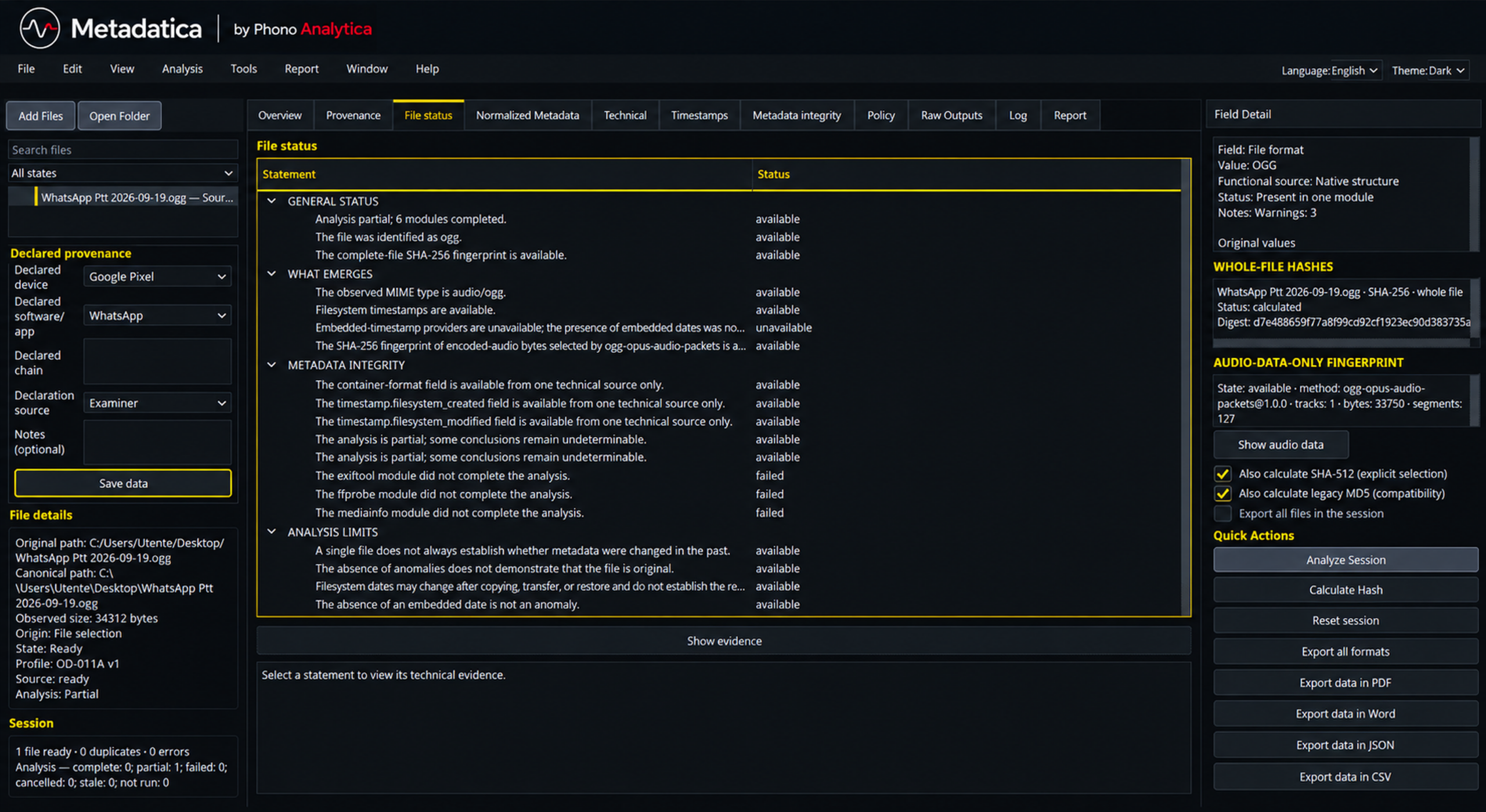
File Status
Analysis state, available evidence and explicit limitations remain visible instead of being hidden.
Designed around professional examination
Separate-tool workflow
- Provider outputs reviewed independently.
- Terminology and representations compared manually.
- Discrepancies need to be tracked by the examiner.
- Technical findings must be transferred into documentation.
Metadatica workflow
- Multiple governed sources inside one examination environment.
- Normalized views preserve provider attribution.
- Disagreements and limitations remain visible.
- Analysis results feed structured reports and technical exports.
Born from Real Forensic Experience
Metadatica was born from the practical experience of Roberto Ruggeri, a forensic audio examiner, who routinely used three different analysis tools to cross-check media metadata, manually compare their findings and consolidate the results into technical reports.
This demanding, time-consuming process inspired the development of Metadatica: an innovative forensic software solution that integrates three analysis engines, automates cross-checking and prepares structured technical reports, while keeping the examiner in control.
From analysis to professional documentation
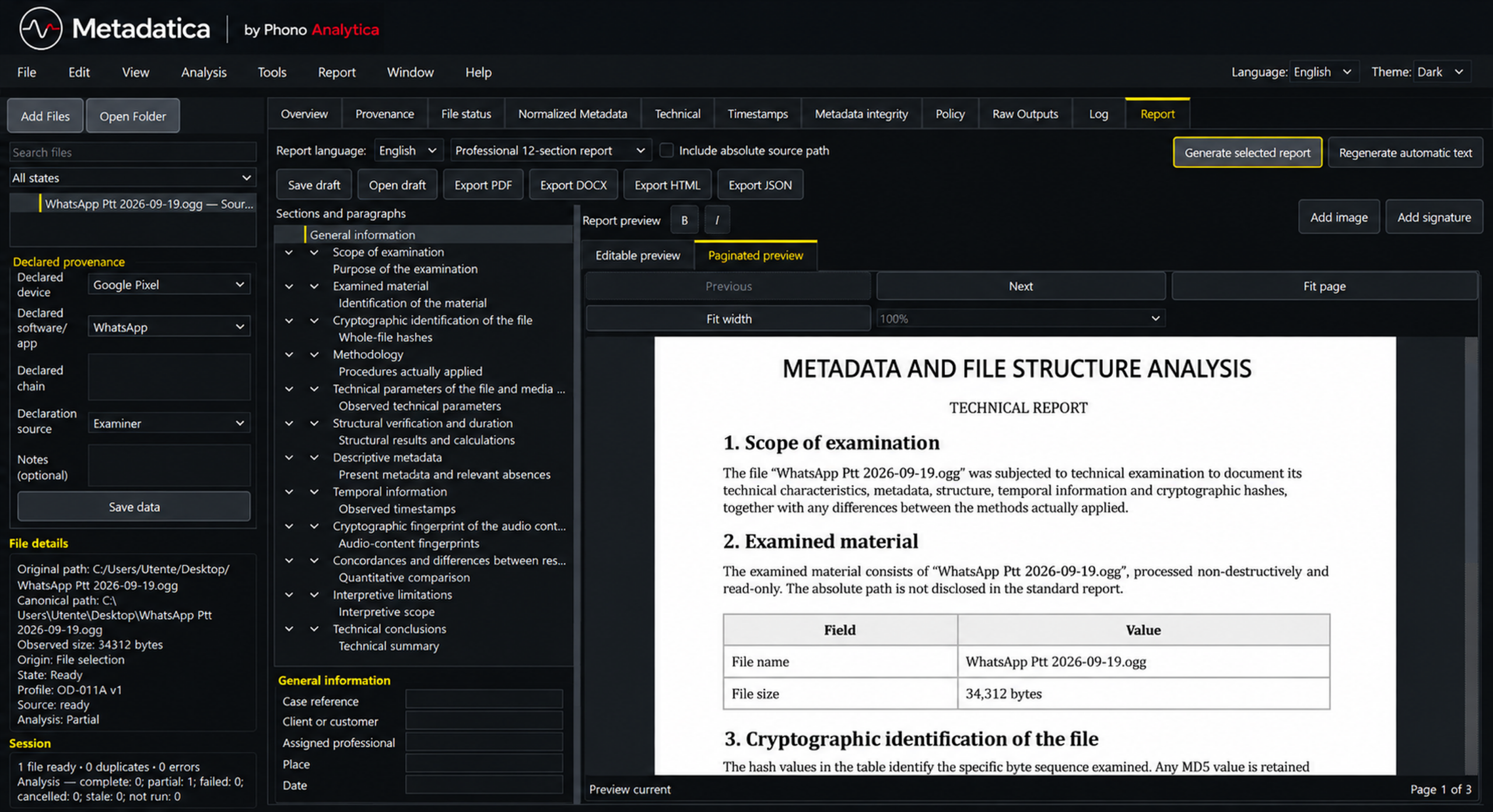
The Report workspace prepares structured technical report content from the current analysis and session. The documented workflow supports English and Italian output, automatic technical sections, editable fields, preview and PDF/DOCX publication.
Technical data can also be exported as JSON, CSV ZIP, XML, HTML and available raw provider outputs for downstream review or processing.
Audio-first, with selected video and container analysis
Metadatica includes bounded support or provider-backed observations across a broad set of audio families and selected common video/container formats. Coverage varies by family and is reported with explicit scope and limitations rather than as a universal format claim.
Technical observations, not black-box verdicts
Metadata can be absent, stale, modified, copied or misleading. Metadatica keeps observed technical data, provenance, diagnostics and limitations available for review instead of converting them automatically into claims of authenticity, originality or manipulation.
Metadatica demo will be released soon
A public demo is planned for evaluation before the commercial release. Product specifications, supported-format details and release information will be published as development progresses.